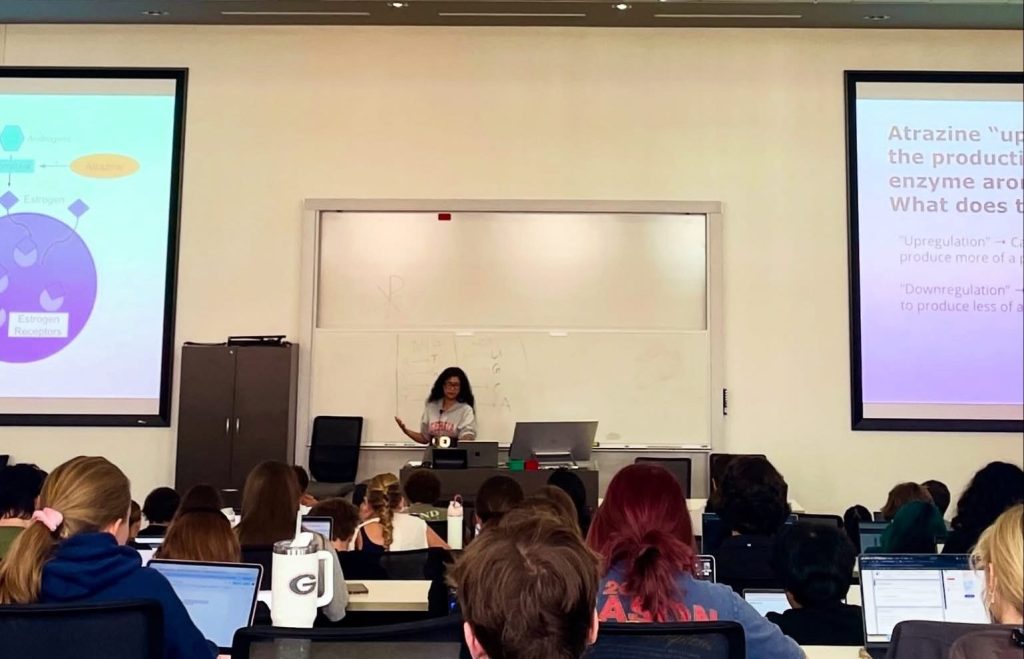
Educator Goal: My teaching philosophy is deeply inspired by my own early struggles to bridge the gap between high school and college STEM coursework. Having overcome those barriers to access, and now as a biology education researcher, I am fiercely committed to making science accessible to everyone. My overarching goal as an educator is to foster a highly inclusive environment where both biology majors and non-majors feel and embrace a profound sense of belonging and the freedom to explore. I need my students to recognize that scientific literacy is not an exclusive club, but an empowering tool they can carry into any career pathway. To translate this vision into practice, my classroom emphasizes fostering critical thinking through intentionally scaffolded inquiry, cultivating an emotionally safe climate that encourages intellectually productive struggle, and grounding science in practical, relatable contexts so that knowledge is retained and utilized far beyond the final exams.
Critical thinking prepares students for life, not just for careers. It all starts with curiosity and facing challenging questions. I guide students to construct their own knowledge by helping them break down complex concepts. Because “picturing things” is my kind of way to teach, I often rely on analogies and storytelling. For example, to help non-majors conceptualize gene expression in BIOL 1103L, I drew a cartoon comparing the process of transcription to an Amazon delivery driver, deciphering a condensed concept into a more tangible scenario. This approach guides their critical thinking by turning a complex biological mechanism into a sensemaking exercise. As students identify and describe the individual elements of transcription, they learn to critically analyze how and why each piece must work together to drive the overall process. Similarly, when teaching students how to break down climate change graphs in BIOL 1108, I intentionally scaffold the activity by asking them to literally observe the visual trends first before interpreting the relationship between variables, making it easier to grasp why we need proxy data. Through curricular frameworks that facilitate authentic inquiry, I mentor students through experimental design, enhancing their epistemic agency and helping them investigate how and why biological systems behave the way they do.
Emotionally safe spaces for productive struggle foster enduring resilience in a post-pandemic learning era. Recognizing that biology laboratory courses demand significant cognitive bandwidth and time, I actively cultivate a supportive atmosphere to alleviate student anxiety and restore focus. To monitor student well-being and encourage holistic reflection, I implement “temperature checks” which are brief, low-stakes exit reflections allowing students to express themselves creatively through quick sketches, journaling, and mental breaks. Remembering the initial intimidation of entering research-related environments, I created an accessible guiding document for introductory biology undergraduate scholars, designed to clarify standard expectations for lab reports and promote academic self-efficacy. This intentional cultivation of approachability directly nurtures an inclusive learning climate. For example, my PSY 009 students noted that maintaining an empathetic, welcoming, and accessible presence profoundly transforms their confidence, encouraging active engagement and meaningful scientific inquiry.
Translational learning empowers students to see science as a relatable, everyday tool rather than an intimidating abstract concept. To make abstract concepts intuitive, I bridge complex topics with daily experiences. Recognizing how intimidating quantitative methods can be for non-math majors, I introduced the Probability Density Function to introductory Sri Lankan psychology scholars using a beloved local Sri Lankan staple: selecting pastries at Caravan Bakery. By examining natural variations in pastry dimensions, I grounded abstract statistical theories in a familiar, engaging scenario before running digital simulations, which helped PSY 009 scholars find the material transparent and scaffolded. Likewise, during BIOL 1108 discussions on evolutionary ecology, I contextualized prey switching through a late-night fast-food order. Connecting foundational models to everyday choices helps scholars grasp fundamental principles while illustrating how scientific reasoning applies outside the classroom. As a biology education researcher, I continuously evaluate and think about these pedagogical interventions to understand how contextualization influences persistence, refining my practice to train confident, adaptable thinkers.
Ultimately, my teaching philosophy is rooted in the conviction that higher education must be transformative rather than transactional. By dismantling early structural barriers, connecting abstract concepts to relatable experiences, and honoring the unique perspectives scholars bring to the learning space. I cultivate lasting academic self-efficacy. Whether my students go on to specialize in STEM disciplines or apply scientific reasoning across other pathways, my aim is that they depart equipped with the critical thinking abilities, personal resilience, and intellectual curiosity needed to navigate complex global challenges.