Advancing Equitable Outcomes in Biology Education Research (BER)
As a Cellular Biology PhD Candidate at the University of Georgia, my research sits at the intersection of curriculum design and student success. Currently, I lead a longitudinal project examining how an introductory biology lab curriculum developed at the University of Arizona—Authentic Inquiry through Modeling in Biology (AIM-Bio; Hester et al., 2017)—impacts long-term STEM persistence. What sets AIM-Bio apart from traditional lab courses is its emphasis on student epistemic agency. Rather than following cookbook steps, students engage in authentic scientific inquiry: they construct models, form hypotheses, and design their own experiments to explore the real-world phenomena happening right in front of them.
Over the course of this project, I have conducted advanced quantitative data analytics on institutional data from a cohort of over 1,700 college students, specifically examining how inquiry-based molecular and cellular biology interventions can drive retention and equity at Hispanic-Serving Institutions (HSIs). I am currently preparing a first-author manuscript to synthesize these results.
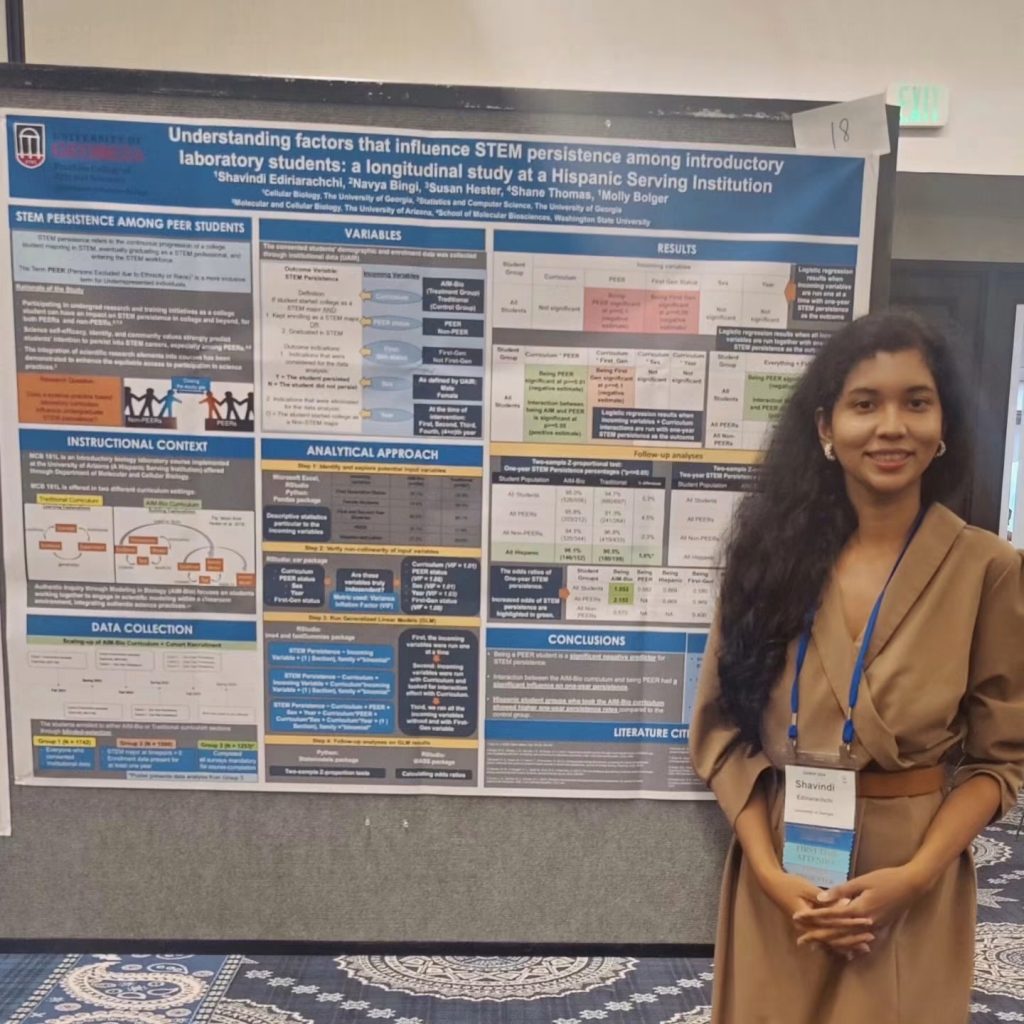
Quantitative Data Analytics & Statistical Modeling
To uncover the complex factors influencing student retention, my methodology blends robust data science techniques through various plat forms. I design and implement custom Python algorithms to automate raw data processing and generate dynamic data visualizations. I have demonstrated these skills in a co-authored research publications (See Thomas et al., 2026 under Publications & Posters) or direct link here.
Furthermore, I utilize advanced statistical software—including RStudio and Mplus—to build logistic regression and structural equation models (SEM) that track student pathways and understand variables mediating such pathways.
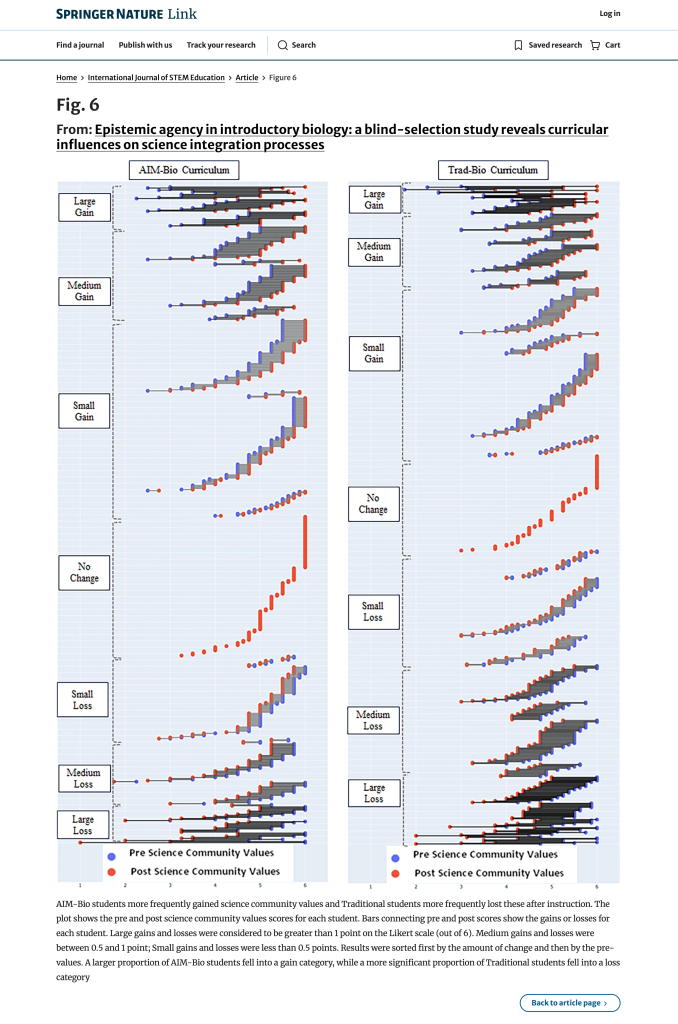
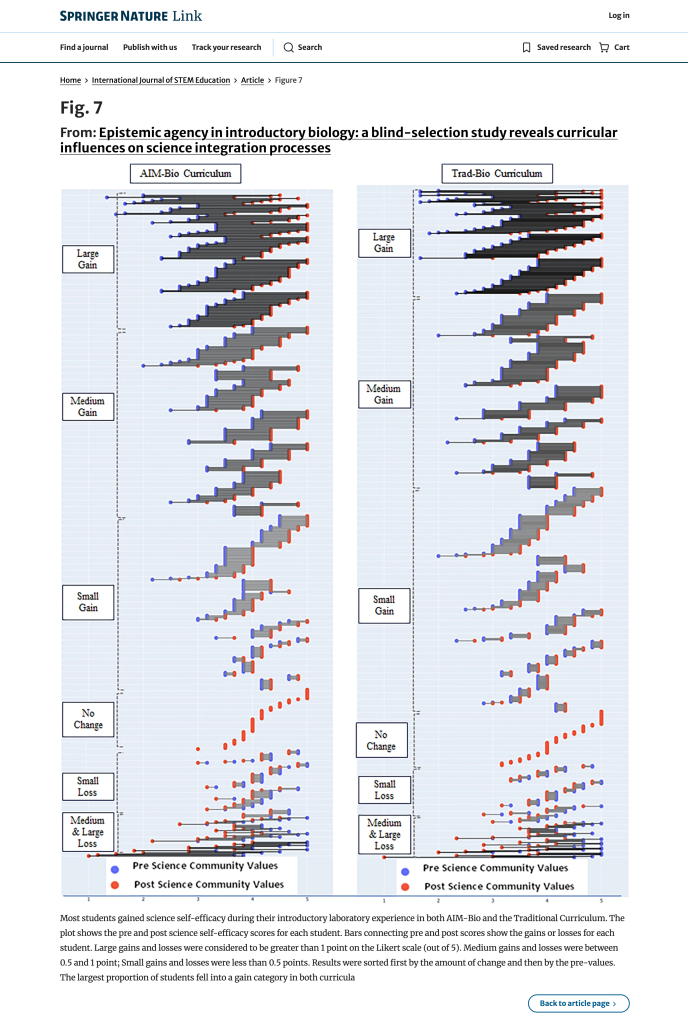
Complementing my quantitative efforts, my research employs qualitative methodologies to deeply explore the nuances of student science social integration. I have developed robust conceptual frameworks and applied rigorous qualitative coding to student reflections, evaluating how collaborative learning environments cultivate essential psychological constructs such as science identity and self-efficacy. I am currently leading the development of a specialized coding guide designed to categorize the mechanisms driving science self-efficacy growth among Hispanic students in introductory laboratories. This qualitative expansion was directly informed by the findings of Thomas et al. (2026), which revealed that Hispanic students enrolled in the AIM-Bio curriculum at this institution exhibit significant longitudinal gains in self-efficacy compared to those in traditional laboratory settings.
The gallery below highlights my contributions to the data visualization components of Thomas et al. (2026). If you are interested in generating these types of plots for your own research, you can access the source code via my [GitHub link].
Collaborative Discoveries and Academic Mentorship
My research has contributed directly to the broader scientific community through peer-reviewed publications and national presentations. I have produced data visualizations and statistical evidence for research demonstrating how laboratory curricula regulate student science social integration and position undergraduates as epistemic agents (Thomas et al, 2026). My findings have been shared as featured conference talks and poster presentations at the Society for the Advancement of Biology Education Research (SABER) meetings. Committed to fostering the next generation of scientists, I actively translate my research into practice by mentoring undergraduate and rotating graduate student researchers in the lab.